
Pricing environmental outcomes, proving additionality, and thinking beyond the price.
I recall a brisk morning right at the end of the before-COVID times: February 22, 2020.
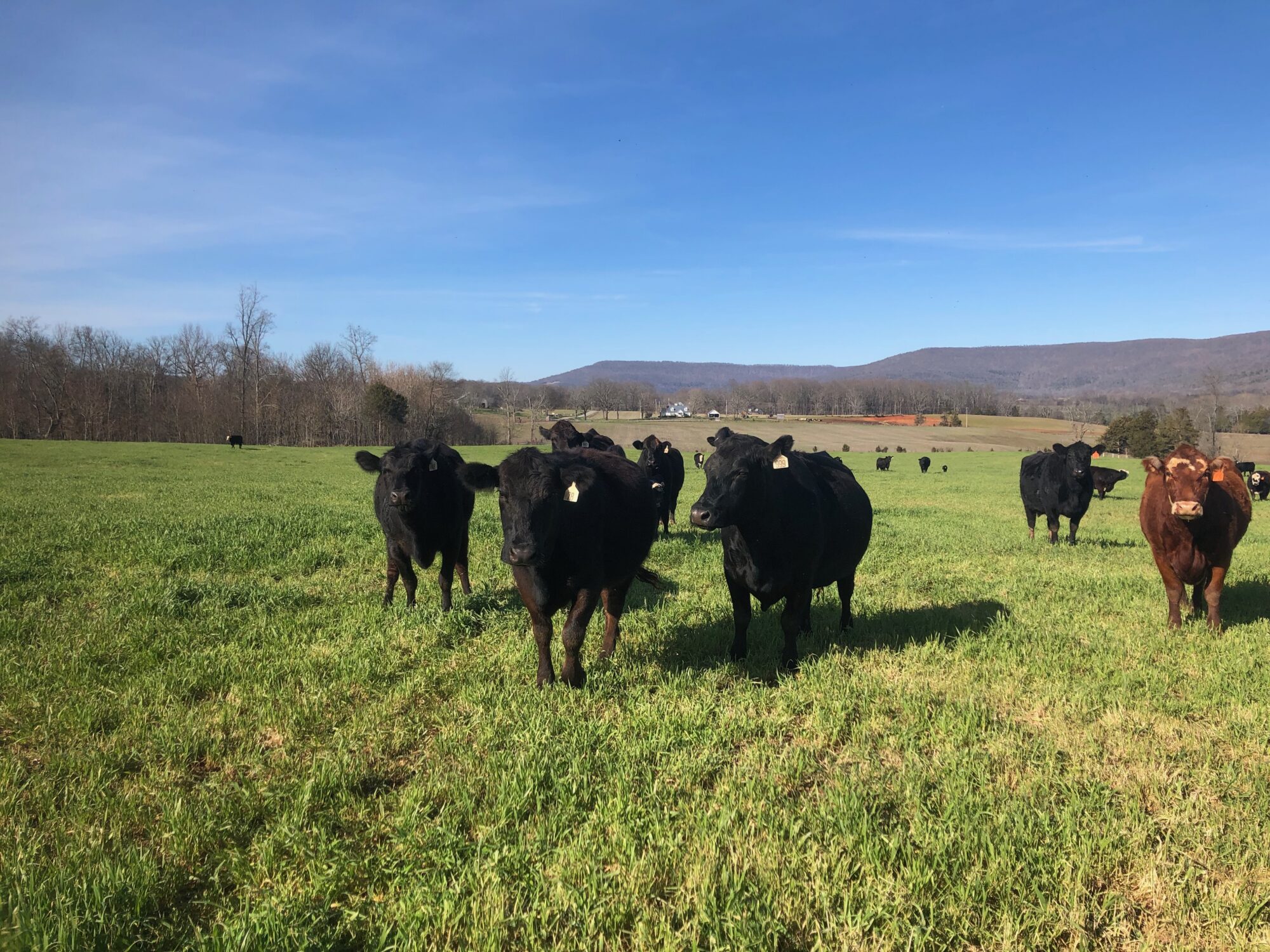
I was still at Nori and part of the AgLaunch program, living in Memphis, Tennessee. I borrowed my housemate Mitchell’s truck and took myself on a weekend road trip across the state, with a key stop at the Willis Farm in Coffee County.
I sat down with Don and his nephew Cory to talk about the Nori program. Their recent conservation practices qualified them to generate NRTs (the Nori Carbon Removal Tonne) and I was there trying to explain how this strange new carbon market worked. At some point, amid the talk of verification, enrollment, contracts, and carbon accounting, Don interrupted:
“What good is an NRT? Can I sell it at the antique roadshow?”
It was funny. I laughed. But later, riding around the farm with Cory and talking more concretely about production, prices, and how the farm actually made decisions, Don’s question started to feel less like a joke. He had gotten directly to one of the hardest questions in environmental markets:
What is this thing actually worth?
There is more than one way to make a price
We often talk about “the price of carbon” as though somewhere, if we just collect enough data, we will discover the correct number. That’s not really how pricing works.
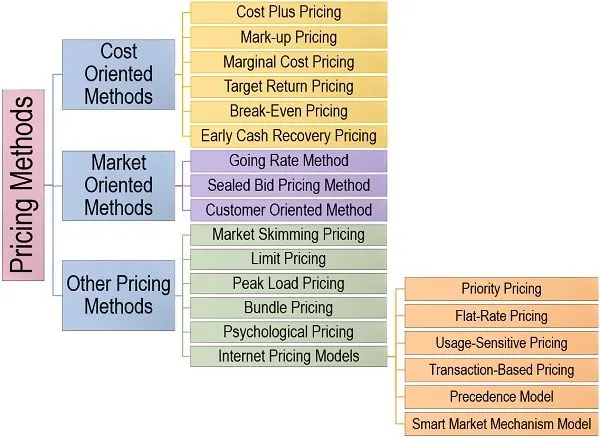
There are dozens of ways to arrive at a price. You can start with your costs and add a margin. Calculate the price required to break even. Work backward from a target return. Look at what comparable products are selling for. Ask what a customer is willing to pay. Bundle products together. Offer an introductory price to establish a market.
Economists and business-school textbooks have names for all of these: cost-plus, break-even, target-return, going-rate, customer-oriented, bundle pricing, and so on.
None is inherently the true price. They answer different questions. That distinction becomes particularly important in environmental markets, where we are frequently pricing something for which the conventional market either does not exist yet or does not capture the environmental value we care about.
I ran directly into this again recently while working through the economics of a biochar project. One way to price the environmental attribute was simply to ask:
What are buyers paying for something like this?
That is going-rate pricing. Find comparable environmental transactions, choose a defensible market price, and put it into the financial model. That can be useful. But it answers a different question from:
What payment is actually required to make this project happen?
Suppose, using intentionally simple numbers, that it costs $15 to produce a product that the conventional market will only buy for $10. There is a $5 gap.
If creating that product also causes one tonne of incremental CO₂e benefit, then an environmental payment of $5 could close the gap and make the activity economically viable. Now the environmental payment is not simply taking the price of carbon from some external market.
It is helping pay for the difference between business as usual and the new activity we want to enable. And that gets us much closer to the logic underneath financial additionality.
Which brings us to everyone’s favorite word: additionality

I’m making a few stickers for New York Climate Week this year. Find me (or come to this event) if you want this one.
Additionality is one of the most useful and maddening ideas in environmental markets.
The useful version is simple:
Did this intervention cause something to happen that otherwise would not have happened?
We should ask that question.
If a farmer was already going to adopt the practice, a factory was already going to replace the equipment, or a forest was already going to remain standing, we should be skeptical about claiming that our money caused the environmental outcome.
That’s basic intellectual hygiene. The trouble begins when we pretend that the counterfactual is easy to observe. It isn’t.
Maybe the missing $5 really is the problem. But maybe it isn’t.
Maybe the project needs someone willing to sign a multi-year purchase agreement. Maybe it needs working capital before environmental revenue arrives. Maybe a downstream customer must change its procurement rules. Maybe a lender needs protection against an unfamiliar risk. Maybe the technology must survive a commercial trial before anyone will finance it.
So rather than asking only whether something is “additional,” I increasingly find another question more useful:
What constraint did the capital remove?
That is where pricing alone stops being enough.
A good cost curve doesn’t mean the system works
We’re seeing a version of this in our work on agricultural water resilience in the High Plains.
We have been looking at a deceptively simple question:
When does it make economic sense to grow a lower-water crop such as sorghum instead of the incumbent alternative?
To help explore that, we built a dashboard using extension crop budgets from Texas and Kansas.
The tool lets you compare crops, regions, irrigation regimes, yields, prices, costs, returns, and irrigation requirements. You can look directly at the farm economics rather than beginning with a generalized statement that one crop is “more sustainable.”
That is useful. It helps answer an essential first question: Does the intervention actually make economic sense for the person being asked to make the change?
But a partial budget is not a recommendation. It cannot tell us whether the farmer can insure the crop. It cannot tell us whether the lender considers it riskier. It cannot guarantee that a buyer exists nearby. It cannot tell us whether the local infrastructure can handle it, whether a dairy wants it, whether hauling it 100 miles destroys the economics, or whether decades of familiarity with the incumbent crop make the supposedly attractive alternative feel like a bad bet.
Those are not minor complications around the edge of the decision.
They are part of the decision.
The economics can work and the system can still fail.
This is the same distinction I wrote about earlier in an article “From Cost Curves to Coordination.”
A price makes value visible. It does not automatically determine who bears the risk, who moves first, when payment occurs, who owns the claim, or whether all the actors required for the outcome are actually willing to participate. Once multiple actors have to change behavior, we are no longer dealing with a single economic decision. We are dealing with a system.
That leads to a distinction I find useful:
Pricing asks: What is the outcome worth, or what does it cost to create?
Additionality asks: What changed because this money showed up?
System design asks: What else must become true for the activity to happen and persist?
We need all three.
A good price with weak additionality can reward something that would have happened anyway. Strong additionality attached to terrible long-term economics can create an activity that survives only as long as the subsidy does. And attractive unit economics can still go nowhere if the surrounding system is not aligned.
The better question isn’t always “how much do we pay?”
This is why I get uncomfortable when climate-finance conversations start with:
How much do we need to pay someone to do the good thing?
Sometimes that is exactly the right question. But sometimes it isn’t.
Imagine our lower-water crop pencils out economically, but the farmer’s lender is uncomfortable because crop insurance provides weaker protection.
Another $20 per acre may do very little.
Maybe the useful intervention is a loan guarantee. Or an offtake commitment. Or a price floor. Or first-loss protection. Or a contract from the buyer that removes uncertainty around who is going to purchase the crop. The right environmental finance instrument depends on the actual constraint.
Which suggests a better question:
What needs to become true for the environmentally preferable thing to become the economically rational thing?
That is a systems question.
From concessional capital to catalytic capital
This is also why I think it is important to distinguish between concessional and catalytic capital.
Concessional capital makes something cheaper. It accepts a lower return, assumes greater risk, provides a grant, or otherwise supports something the conventional market will not finance on the same terms.
There is nothing inherently wrong with that. We need it.
But an endless subsidy is not a market. Catalytic capital has a more specific job:
Change the conditions so that other capital, customers, or participants can follow.
It might fund the first commercial trial. It might guarantee a buyer’s minimum purchase. It might absorb early risk while lenders learn how an unfamiliar activity performs. It might fund the evidence needed to establish a track record. Or it might provide cash today against environmental revenue that will not arrive until much later.
The important thing is not merely that the capital is cheaper. Rather, that it changes what can happen next. A client I work with who has spent decades building conventional businesses put the objective much more simply during a recent conversation:
We want to get off free as quickly as possible.
Exactly. Giving something away can be an excellent way to run a trial. It is a terrible permanent pricing strategy. Environmental finance should aspire to the same thing.
Additionality as a system-design question
So rather than treating additionality primarily as a ritual for blessing or rejecting an environmental credit, I increasingly want to use it as a system-design discipline. When we are considering an environmental investment, I want to ask:
- What isn’t happening today that we want to happen?
- What is actually stopping it—and who controls that constraint?
- What price or financial instrument removes that constraint?
- What evidence would demonstrate that the intervention actually changed the outcome?
- And, crucially, when can the special capital go away?
That last question matters.
If five years from now the project requires the same subsidy to survive, perhaps we successfully funded an environmental outcome.
That may still be worthwhile.
But we probably did not catalyze a market.
If instead the first dollars paid for uncertainty: proving performance, creating demand, establishing a price, reducing risk, building a track record—and commercial actors can increasingly take it from there, something more interesting has happened.
We have turned capital into a catalyst.
Back to the antique roadshow
Six years later, I think Don’s question was more sophisticated than many of the answers I gave him at the time.
What good is an NRT? Can I sell it at the antique roadshow?
He was really asking:
Who buys this thing?
Why?
How did they decide what it was worth?
What makes me believe they will still want it tomorrow?
And I would now add one more: What else has to happen for this transaction to create the outcome we actually care about?
Those are still the right questions.
Additionality helps us ask: What did the money truly change?
Pricing helps us ask: How much value needs to move?
And system design forces us to ask: Who else must move with it?
If we cannot answer those questions, our environmental asset may indeed be questionably additional.
And if our answer is simply, “Well, somebody was willing to pay $X per ton,” we still haven’t really answered Don’s question.