
I have a bone to pick with how we approach agricultural sustainability, and with how I’ve approached it myself. Too often, we settle on a solution, then work outward to find the people and programs it can serve. We pay less attention to the decisions those people face, what would let them act, and what we need to learn along the way. We can end up investing in a tool that performs well while leaving the decision we care about unresolved.
Three approaches have helped me avoid committing to a solution too early: Jobs to Be Done, systems thinking, and design thinking. They help me understand why someone would change what they do, what would make that change workable, and how to develop the approach with the people expected to use it.
For a program lead with a fixed budget, the practical question is where the next dollar or hour will make a difference: better information, more support on the ground, or a different approach altogether.
Understand the job
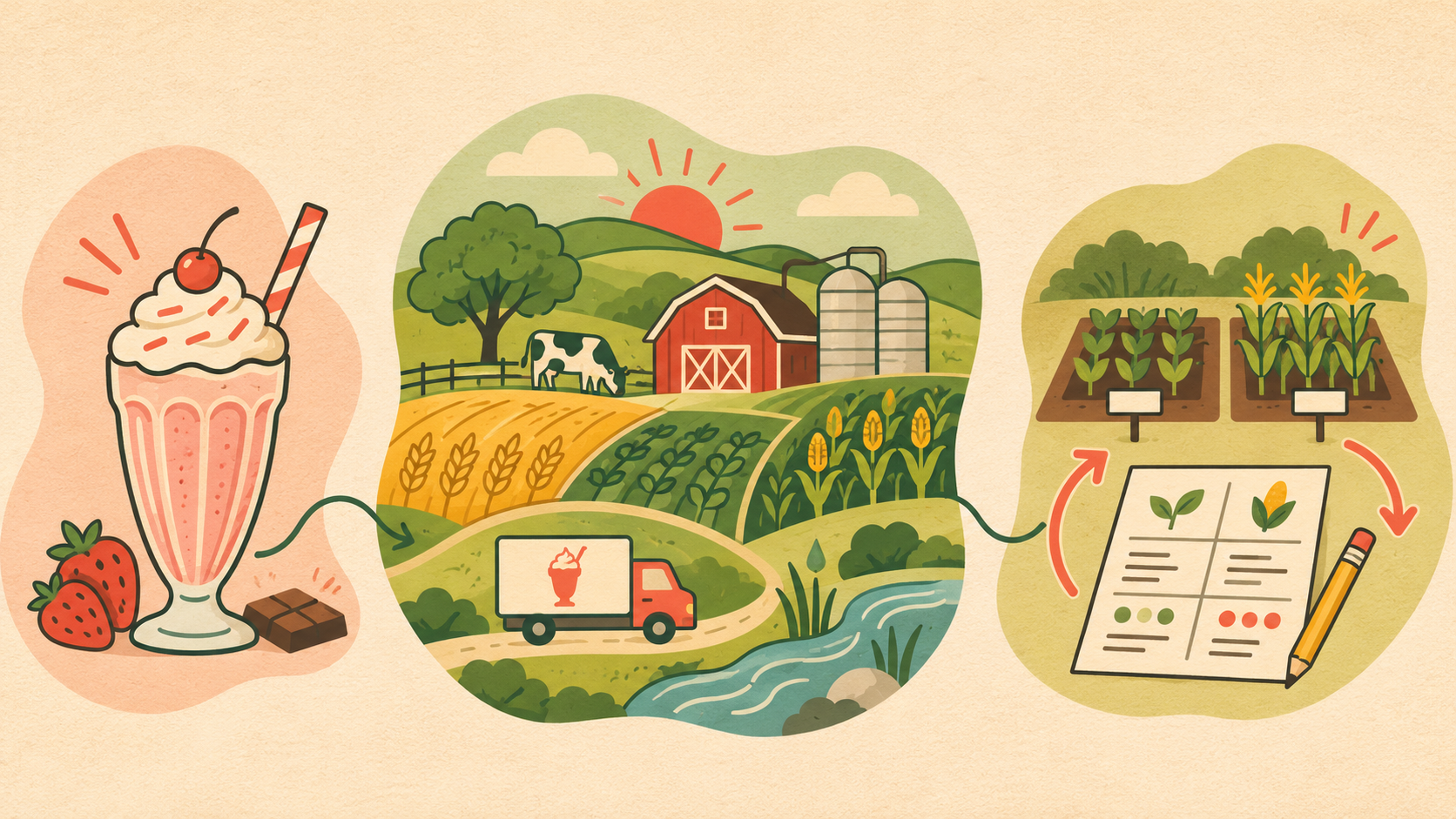
To understand what I mean by “job”, let’s start with milkshakes. Consider the McDonalds case study where they hired Clay Christensen and his team to help increase sales for the classic shake. Asking customers how to improve the product yielded familiar suggestions about its features. Observing purchases and interviewing customers with “what job are you hiring the milkshake to do” revealed something more useful. Many morning customers wanted to make a long commute more bearable and stave off hunger without making a mess. The alternatives included bananas, bagels, and donuts. Later in the day, a parent might buy the same product as a treat for a child. Understanding those different jobs changed which features mattered.
That is the value of Jobs to Be Done (JTBD).
A simple JTBD statement reads like: When I am ____ (situation), I want to do ____ (activity), so I can ________ (outcome).
In agriculture, a job for a grower might sound like this: “When I’m planning next season with tight margins, I want to find a workable way to reduce irrigation costs while protecting my income.”
A company may need a platform to document outcomes and support grower payments. The grower needs to decide whether changing a practice makes business sense. That may require a financial comparison, trusted advice, or help managing the transition. A program needs to support both.
Getting this right also means understanding what makes change attractive and what holds it back. Lower input costs might create interest. Uncertain returns, a tight labor schedule, or equipment built around the current system might make staying put reasonable. Those are things to investigate with the grower.
Map the dependencies
Once we understand one person’s job, we can ask who else must act, what they need, and whether they have the capacity and incentive to participate. Ron Adner’s Value Blueprint asks who else must be able to deliver, who must be willing to participate, and what makes participation worthwhile (more on that here).
A grower may need a financial comparison. An advisor needs time and useful information to help. A buyer may provide funding while needing evidence for an inventory. The program manager needs to make those pieces work together. Their needs can reinforce each other or pull in different directions.
Precision Conservation Management, a past client, offers a useful example. PCM combines farm data and financial analysis with support from a regional specialist. The specialist helps collect records and delivers a Resource Analysis and Assessment Plan with results and recommendations for the next crop year. PCM pairs the analysis with someone who helps the grower use it. For a program lead, the example raises a budget question: would more analysis help, or does delivering the value require more specialist time?
In another example, our white paper on water-aligned feed systems examines when sorghum can make business sense in High Plains beef and dairy rations. A grower might be interested because of irrigation costs, while remaining confident in the equipment, advice, and buyers they already have for corn. A favorable crop budget addresses part of that decision. We also need to understand the feed buyer’s requirements, the purchasing arrangement, and who carries the risk of trying something different. Putting the comparison in front of growers and advisors helps us discover which assumptions matter, and whether the next step is improving the tool, involving another partner, or reconsidering the proposal.
A useful check is to ask what would happen if the information were perfect. Would someone make a different decision? Could they act on it? Would they have a reason to? Those answers help distinguish a gap in evidence from a gap in capacity or incentives, and point toward different investments.
Try, learn, and adapt
The feed-system analysis raised a second question: would producing the crop make sense for growers? That led us into crop budgets and, eventually, our High Plains Farm Budget Dashboard. It lets users compare crop budgets and adjust yield, price, and irrigation assumptions to explore what might work for their operation.
We plan to test the dashboard with growers and advisors facing an actual crop decision. We’ll start with how they make that decision today, then work through the comparison together: which assumptions do they question, what changes their thinking, and what do they still need before acting?
That is where design thinking helps us move beyond building a useful calculator. We might find that a simpler comparison and a conversation with an advisor are more useful than another feature. Or we might find that the economics look promising, but a buyer’s commitment is still missing. Each finding would point to a different next investment.
Before testing, we’ll make our assumption explicit: seeing the financial trade-offs will help a grower identify a crop option worth pursuing. We’ll look for whether the comparison changes what they consider and what they do next. If it doesn’t, we need to understand why. If it does, we still need to follow through: did the change protect income and reduce water use? A useful comparison is one step toward those outcomes.
Putting this into practice
So what do milkshakes teach us about agricultural sustainability? Making a better milkshake only helps if it makes someone’s morning better. Before investing in a better tool or a bigger program, we should ask whose situation it improves, why they would choose it over what they do today, and what else they need to make it work. Then we need to try it with them and be willing to change the recipe.
Start with four questions.
- What are we helping someone accomplish?
- What makes a change attractive, and what makes staying with the current approach reasonable?
- What combination of information, tools, people, funding, and agreements would make action possible?
- What do we need to learn before committing more time or money?
Work through these questions with the people whose decisions matter. Choose an assumption to test, name someone responsible, and agree on what would lead you to continue, change, or stop. At Carbon A List, we help program leads work through these choices using a Program Design Blueprint: a practical plan for what to fund, who needs to act, and what to test before committing more resources. Deciding whether to launch a pilot, renew funding, or expand a program?